Epoxy vs Polyaspartic Garage Floors: Which Lasts in Colorado Winters
Updated by Redrock Home Co.
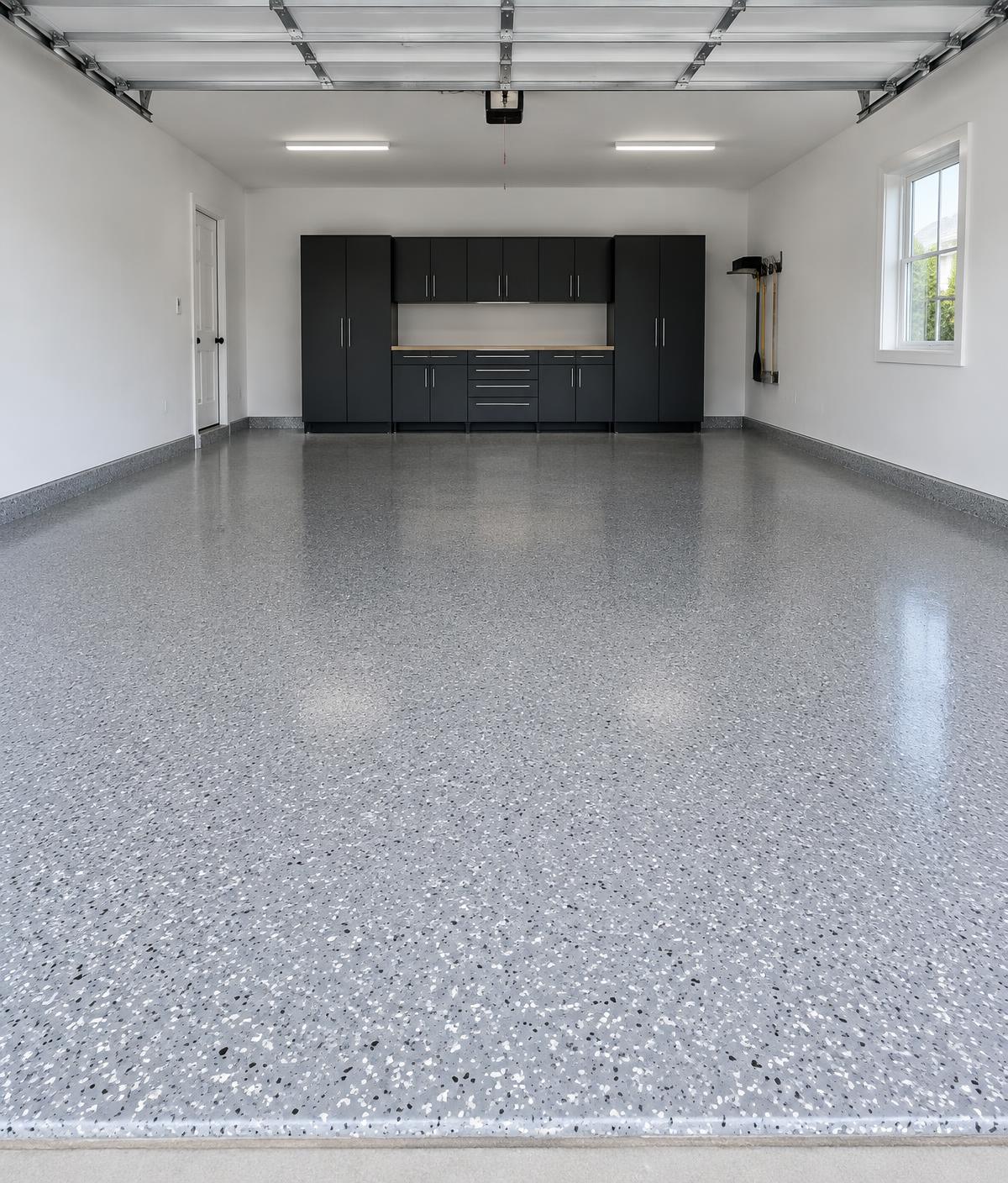
For most Colorado garages, a polyaspartic topcoat system lasts longer than epoxy. It cures faster, holds its color in strong sun, resists hot tire pickup and handles freeze-thaw movement better. Epoxy still makes sense in a few cases, covered below. Whichever you choose, prep decides the result. See how the full system works on our garage floor coatings page.
The short comparison
Here is how the two coatings compare on the factors that matter most in a Colorado garage. These are general traits of each product type. Specific products vary, and your crew can walk you through the system they apply.
| Polyaspartic | Epoxy | |
|---|---|---|
| Cure time | Fast. A full system with proper prep fits in 1 to 2 days. | Slower between coats and before parking, often several days. |
| UV stability and yellowing | UV stable. Holds its color with the door open. | Most yellow and chalk in sunlight over time. |
| Hot tire resistance | Strong when bonded to diamond-ground concrete. | More prone to hot tire pickup, especially DIY kits. |
| Flexibility in freeze-thaw | Slightly flexible, moves with the slab. | More rigid, more likely to crack or lift. |
| Mag chloride exposure | Sealed topcoat resists road brine and salt. | Resists brine when intact, but cracks let it reach concrete. |
Cure time
Epoxy is slow to cure. Most systems need many hours between coats and several days before you can park. That stretches the job and gives dust, bugs and cold air more time to affect the finish.
Polyaspartic cures much faster. That speed does not mean a rushed job. It lets a crew do diamond grinding, crack repair, a moisture test, a base coat, a full flake broadcast and a polyaspartic topcoat in 1 to 2 days, with each layer given proper time to cure. Your garage is back in use sooner without skipping prep.
UV stability and yellowing
Colorado sun is strong, and it gets stronger with elevation. Most epoxies are not UV stable. When the garage door is open on a west-facing driveway, sunlight slowly turns epoxy amber and chalky, often starting in the strip nearest the door.
Polyaspartic is UV stable and holds its color. That matters most in foothills homes, like those around Lookout Mountain and Genesee covered in our Golden garage floor guide, and in any garage where the door stays open while you work or load gear.
Hot tire resistance
Hot tire pickup happens when warm tires soften a coating and pull it off the concrete as they cool. It is the most common way DIY epoxy garage floors fail. Highway driving in summer heats tires enough to do it, and a coating that was rolled onto unground concrete has little grip to resist.
A polyaspartic topcoat over a properly bonded base resists hot tire pickup well. Bond matters more than product here, which is why diamond grinding comes first on every floor Redrock books.
Flexibility under freeze-thaw cycles
Front Range winters swing above and below freezing again and again. Concrete expands and contracts with every swing. A rigid coating like epoxy can crack along with the slab or lose its bond at the edges.
Polyaspartic stays slightly more flexible, so it handles that movement better. Crack repair before coating also helps, because filled cracks are less likely to open under the floor. Freeze-thaw is especially hard on older slabs, like the mid-century concrete in Lakewood, and on garages near the foothills in Morrison.
Mag chloride exposure
Colorado roads are treated with magnesium chloride and salt brine all winter. It drips off your car and dries on the slab. On bare concrete, mag chloride soaks in and breaks down the surface over time.
Both coatings keep mag chloride on top while they are intact. The difference is how long they stay intact. A coating that has cracked, yellowed or lifted from hot tires lets brine reach the concrete underneath. A polyaspartic topcoat that stays bonded keeps protecting the slab, and you can squeegee or rinse the brine out the door. Busy family garages in Littleton see this every winter.
What matters more than the product: prep
A great coating on poorly prepared concrete fails just as fast as a cheap one. Every floor Redrock books follows the same order: diamond grind, crack repair, moisture test, base coat, full flake broadcast and polyaspartic topcoat. Diamond grinding opens the concrete so the base coat bonds into it instead of sitting on top. Crack repair keeps freeze-thaw water from working under the floor. The moisture test catches slabs that would push water up and blister the coating.
Acid etching, the step most DIY epoxy kits rely on, does not open the surface as evenly as grinding and does nothing about old sealers or paint. That is a big reason so many DIY epoxy garage floors in Colorado lift within a couple of winters. If you are comparing quotes, ask each company how they prep the slab. The answer tells you more than the brand name on the bucket.
Why Redrock books polyaspartic topcoat systems
Redrock books and coordinates garage floors; vetted independent local crews do the installing. We book polyaspartic topcoat systems because, across sun, hot tires, freeze-thaw and mag chloride, they hold up better in Colorado garages. They also let crews complete full prep and proper cure time inside a 1 to 2 day install. Every floor comes with a written warranty, terms shared before booking.
When epoxy still makes sense
Epoxy is not a bad product. It still makes sense in a few situations:
- Indoor spaces with no sun, like a basement workshop or utility room, where yellowing does not matter.
- As a base coat under a UV-stable topcoat. Some systems use an epoxy base for build and a polyaspartic topcoat for wear.
- Tight budgets on a DIY project, as long as you grind the concrete first and accept a shorter life.
- Floors that stay climate controlled year round and rarely see a car.
FAQ
Is polyaspartic better than epoxy for a Colorado garage?
For most garages, yes. It cures faster, resists UV yellowing and hot tire pickup, and handles freeze-thaw movement better than epoxy.
Why do epoxy garage floors peel?
Usually because the concrete was not diamond ground before coating. Without that bond, hot tires and freeze-thaw lift the coating.
Does mag chloride damage a coated garage floor?
A bonded, intact coating keeps mag chloride on the surface so it can be rinsed off. Problems start when a coating cracks or lifts and brine reaches the concrete.
How long does a polyaspartic install take?
Plan on 1 to 2 days, which covers diamond grinding, crack repair, a moisture test and proper cure time between coats.
Is epoxy ever the right choice?
Yes, for indoor spaces without sun, as a base coat under a UV-stable topcoat, or for budget DIY projects where the concrete is ground first.
Ready for a price?
Send a few details and we'll text you a price before anything is scheduled.